Reliable energy, clean water and healthy food for our grandchildren.
An applied-complexity research institute turning critical-infrastructure risk into open mathematics anyone can check. Founded and led by Jim McKenney.
“The actor is fingerprinted, the danger is scored, the attack is simulated, ALE puts a dollar figure on it, Gordon-Loeb tells you what to spend, and the board decides.”
What Eigenia Does.
We unify industrial plant engineering, cyber-physical modeling, and quantitative risk engineering. By making physical topologies computable, critical infrastructure operators can evaluate catastrophic vulnerabilities and secure vital public systems.
Open Vendor Neutral Standards
We bridge mechanical CAD piping, digital bills of materials, and electrical grid schemas into a single computable architecture, eliminating proprietary software silos across critical utilities.
- •Open, reproducible schema specifications
- •Automated conformance suites for suppliers
- •Unified physical-digital topology models
Cyber-Physical Digital Twins
Directly coupling fluid dynamics, thermodynamics, and electrical flows to operational control networks so simulated operational states mirror real-time plant conditions.
- •Fast transient-state computation
- •Dynamic fault-injection and cascade modeling
- •Continuous verification of safety parameters
Catastrophe Risk Engineering
Replacing conventional Gaussian risk assessments with heavy-tailed catastrophe models that accurately capture systemic dependencies and correlated grid outages.
- •Fat-tail loss exceedance calculations
- •Common-mode power and cooling failure analysis
- •Auditable return on security investment (ROSI)
Why Eigenia exists
Software that governs vital systems should be open to inspection
The water, energy, transport and food systems a society depends on increasingly run on proprietary, vendor-locked software that no operator can independently verify, no regulator can audit, and no court can hold to account. That is a fragile foundation for the things that keep people alive.
Eigenia exists to replace that black box with open mathematics: models, standards and risk methods published in full, so the people responsible for critical infrastructure can check a claim for themselves instead of trusting a supplier's word.
Read the Grandfather's CharterWho is behind it
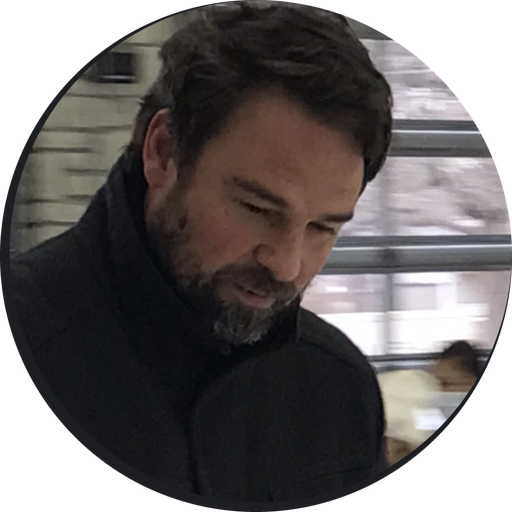
Jim McKenney
Founder & Principal Investigator, Eigenia B.V. Formerly Practice Director, Cyber Engineering, at a global consultancy (Operational Technology Digital Transformation Center of Excellence). Lead engineer, CISO and program manager on large capital DCS upgrade projects.
The physical world keeps its own books. A turbine, a power grid, a water main answers to physics, not to the audit that passed last quarter, and it settles its accounts without warning. I have spent twenty years in the places where civilization actually runs, in the turbine halls, the substations and the pump stations, beside the operators and crews who keep them alive, on projects across the world. I am an engineer; I did the hands-on work alongside them, and they taught me more than I taught them. What I saw there worries me still. We have handed the defense of these systems to people who model spreadsheets, not physics, who cannot say how a transformer dies or how a grid comes apart. A plant that has passed every audit is running on luck, and luck is not a control.
Eigenia is my answer, and its purpose is plain: reliable energy, clean water and healthy food for our grandchildren. The only test that counts is whether we leave these more secure than we found them. So we take the physics out of the black box and write it as open mathematics, from the silicon in the bill of materials to the behavior of the grid, published in full for any operator, engineer or regulator to check and to keep on their own ground. What cannot be proven has no place in a water plant. Nothing proprietary. Nothing hidden.
This is a charter more than a company, neutral by design in the tradition of The Hague, and meant to be carried together. It is for the people who already stand guard over the physical world: the engineers and operators who run these plants, the utilities and public trusts that own them, the researchers who can prove the mathematics, and the insurers and funders who back open science. Join us, and help make sure our grandchildren inherit water, power and food that are sovereign, secure and unbroken.
Series
Fooled by Best Practice
A five-part series by Jim McKenney
Best practice is the advice of survivors. It records what the ones still standing happened to do, and says nothing of the ones who did the same and are gone. These five essays carry Nassim Taleb's argument out of finance and into the control room, where the checklist that has never failed is often the one most certain to fail.
Start with Part IThe Covenant
Who this is for
Eigenia answers to the people who carry the weight of the physical world. Here is where each of them comes in.
You own the concrete, the copper and the consequences. Own the model too, and price the tail in euros.
Nation & sovereignYou cannot govern a box you are not allowed to open. Own your model, air-gapped, and keep your grid off a foreign licence.
ResearcherYour work should outlive the grant. Publish it open and reproducible, where a utility on another continent can run it.
Insurer & actuaryPrice the failure that has not happened yet, heavy-tailed and independently checkable.
Funder & foundationPatient capital with an auditable return, endowing an institution that stays open for good.
Parent & grandparentYou should never have to read the equations. No one gets to say trust us and lock the door on the water your children drink.
Help make sure our grandchildren inherit water, power and food that are sovereign, secure and unbroken.
High-Level Pathways to Participation.
We engage sovereign leaders, utility boards, and research institutions through structured, mathematically verified protocols.
Sovereign States & Regulators
Treaty accessions, intergovernmental data compacts, and evidence harmonization under EU NIS2, CRA, and national infrastructure defense frameworks.
- •Neutral Dutch jurisdiction in The Hague tradition
- •Zero foreign vendor telemetry capture or backdoor exposure
- •National Cyber-Physical Asset Identity standards
Executive Decision Framework
An institutional governance methodology replacing vendor slideware with structured narrative prose, silent reading epistemics, and binding board decision gates.
- •Syntactic accountability in prose replacing sales pitch decks
- •Pre-mortem risk audits and 10 hard committee inquiries
- •Binding sovereign decision gates: Scale, Refine, or Stop
Scientific Working Groups
For university faculties, doctoral researchers, and standards bodies advancing formal verification, graph theory, and open ontologies (DEXPI, IEC CIM, CycloneDX).
- •Open mathematical formalisms and peer-reviewed proofs
- •No corporate NDAs or intellectual property encumbrances
- •Direct participation in shared, international civil benchmarks
Trusts & Endowments
Endowing public research chairs, civil resilience trusts, and long-horizon infrastructure stewardship under the Grandfather's Charter.
- •Dedicated intergenerational public-benefit covenants
- •Independent scientific oversight and published audits
- •Permanent preservation of open infrastructure mathematics
Connect, Subscribe & Engage.
Direct mathematical preprints, sovereign cyber-physical telemetry alerts, and peer-reviewed working group colloquia open to European academic and industrial researchers.
Confidential Executive & Ministerial Briefing
Direct technical consultations for board directors, grid executives, and government ministers navigating critical infrastructure dependencies.
This Site Uses No Cookies
Eigenia does not set cookies. The only thing stored in your browser is one preference, saved in local storage, noting that you have seen this notice.